Is Sedation Dentistry Safe for Toddlers? What Parents Need to Know
Learn whether sedation dentistry is safe for toddlers, what types are used, and what questions to ask your pediatric dentist before the appointment.

Founder, North Media
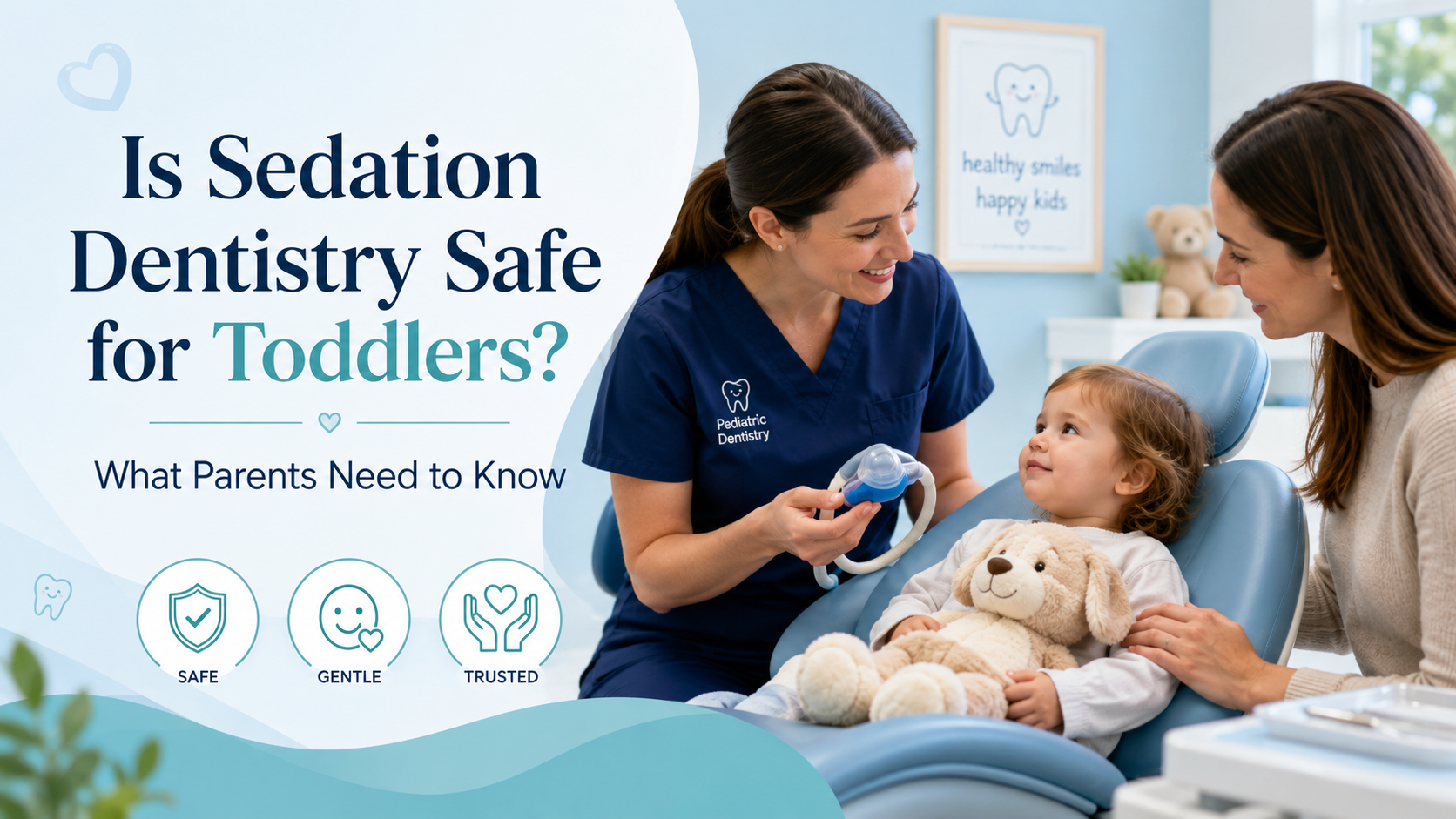
Sedation dentistry is generally safe for toddlers when administered by a qualified pediatric dentist using the correct method and dose for the child's age and weight. Safety depends on the sedation type, the provider's training, the clinical setting, and a thorough health screening completed before the appointment.
If you're searching this question, you're likely facing a real situation: your toddler needs dental work and is too young, too anxious, or too uncomfortable to sit through a procedure without some support.
This article covers the types of sedation used for toddlers, what makes each option safer or riskier, what clinical guidelines require, and the questions worth asking before you agree to anything.
What Types of Sedation Are Used for Toddlers?
Pediatric dentists typically use one of four approaches for young children. Each carries a different risk level and suits different treatment needs.
Sedation Type | How It Works | Risk Level | Common Use |
|---|---|---|---|
Nitrous oxide | Inhaled through a small mask | Lowest | Minor procedures, mild anxiety |
Oral sedation | Liquid medication given by mouth | Low to moderate | Moderate anxiety, longer procedures |
IV sedation | Medication delivered through a vein | Moderate | Rarely used in toddlers |
General anesthesia | Full unconsciousness, typically in a hospital | Highest | Extensive work, severe cooperation challenges |
Nitrous oxide is the most common option for toddlers. It wears off quickly, requires no needles, and allows the child to remain conscious and breathing independently. Oral sedation is also widely used for children who cannot tolerate nitrous oxide or need deeper relaxation.
General anesthesia is reserved for cases where a toddler requires significant dental work and cannot cooperate safely through other methods. It is typically performed in a hospital or accredited surgical centre with an anesthesiologist present.
What Makes Sedation Safe or Risky for a Young Child?
Several factors determine how safely a toddler tolerates dental sedation.
Child health status is the most significant variable. Children with respiratory conditions, heart defects, obesity, sleep apnea, or a history of anesthesia reactions face higher risks. A pre-sedation health evaluation is required before any sedation appointment.
Provider qualifications matter as much as the medication itself. The American Academy of Pediatric Dentistry (AAPD), requires practitioners who sedate children to have specific training in pediatric airway management, emergency protocols, and weight-based dosing.
Monitoring during the procedure is non-negotiable. AAPD guidelines mandate continuous monitoring of oxygen levels, heart rate, and breathing throughout the appointment. A dedicated staff member must monitor the child while the dentist performs treatment.
Dosing accuracy is critical. Children metabolize medications differently than adults, and small miscalculations in a toddler's dose can have serious consequences. Dosing is calculated from the child's exact body weight, not age alone.
Facility preparedness adds another layer of protection. Procedures involving moderate or deep sedation should take place in a setting equipped with emergency oxygen, reversal agents, and resuscitation equipment.
What Are the Real Risks of Sedation for Toddlers?
No medical procedure is without risk. Parents deserve a clear picture.
Nitrous oxide carries minimal risk. The most common side effects are nausea, dizziness, or mild agitation. Serious adverse events are rare when concentration is properly controlled and the child breathes room air at the end of the appointment.
Oral sedation can produce unpredictable responses. Some children become more agitated rather than calm. Respiratory depression is a low but real risk if dosing is not properly calibrated. Children must fast for several hours before the appointment to reduce aspiration risk.
The Dental Practice Patient Acquisition Playbook
Proven strategies to fill your chair and grow revenue. Free download.
General anesthesia carries the most significant concerns for toddlers. In 2016, the U.S. Food and Drug Administration issued a safety communication noting that repeated or lengthy use of general anesthetic and sedation drugs in children under three may affect brain development. Single, short exposures are considered low risk by most clinical guidelines, but the decision should not be taken lightly.
One point worth keeping in mind: the risk of untreated dental disease, including infection, pain, and developmental complications, must be weighed against the risks of sedation. Avoiding necessary treatment is not automatically the safer choice.
What Should Parents Ask Before a Sedation Appointment?
Asking the right questions beforehand helps confirm your child is in capable, prepared hands.
What type of sedation are you recommending, and why is it right for my child?
What are your specific training credentials for pediatric sedation?
How will my child's breathing and heart rate be monitored during the procedure?
Who else will be in the room, and what is their role?
What happens if my child has an adverse reaction?
Does your facility have emergency equipment and trained staff on site?
What pre-appointment fasting requirements apply?
What should I watch for at home after the appointment?
A qualified pediatric dentist will answer these questions clearly and without hesitation. Vague responses or reluctance to discuss details are worth noting.
When Is Sedation Actually Necessary for a Toddler?
Sedation is not required for every toddler dental visit. It is typically recommended when:
The child needs multiple procedures that cannot be safely completed while awake
Extreme anxiety or a strong gag reflex prevents safe treatment
The procedure is lengthy or technically complex
A developmental condition makes cooperation consistently difficult
Local anesthesia alone is insufficient for the child's comfort
For mild cleanings or simple single-tooth procedures, behaviour management techniques, such as tell-show-do, distraction, and voice control, are usually sufficient. According to the AAPD, these non-pharmacological approaches are always the starting point before sedation is considered.
It's also worth noting that early childhood tooth decay remains one of the most common chronic conditions in young children in the United States, affecting roughly 23% of children ages 2 to 5, according to the CDC. When decay reaches a point that requires restorative treatment, sedation may be the most clinically appropriate path forward.
FAQ: Sedation Dentistry for Toddlers
At what age can a toddler safely receive dental sedation?
There is no universal minimum age. The evaluation is based on the child's health status, weight, and the sedation type being used. Nitrous oxide is commonly used in children as young as two, while general anesthesia decisions are made case by case.
Should I get a second opinion before agreeing to sedation?
Yes. If your dentist recommends sedation, especially general anesthesia, a second opinion from another qualified pediatric dentist is reasonable and often encouraged. It helps confirm that sedation is genuinely necessary and that the recommended approach is appropriate.
Can my toddler eat before a sedation appointment?
Fasting requirements vary by sedation type. For oral sedation and general anesthesia, children typically fast from solid food for six to eight hours and from clear liquids for two hours before the procedure. Your dental team will provide specific instructions based on the medication being used.
What are signs my toddler is reacting badly to sedation?
Signs of a concerning reaction include laboured or noisy breathing, lips or skin turning blue, extreme difficulty waking, or prolonged vomiting after the procedure. These symptoms require immediate medical attention.
How do I find a pediatric dentist qualified to perform sedation?
Look for a dentist who completed a pediatric dentistry residency, holds current PALS (Pediatric Advanced Life Support) certification, and works in a facility that follows AAPD sedation guidelines. Board certification through the American Board of Pediatric Dentistry is an additional quality indicator.
If your dental practice offers pediatric sedation and you want more families to find you when they search these questions, North Media helps dental clinics build the kind of online presence that earns trust before a patient ever walks through the door.
From local SEO and Google Business Profile visibility to content that answers what parents are actually searching, we help your practice show up and convert. Reach out to North Media to learn what that looks like for your clinic.
Written by
Founder, North Media
Ram is the Founder of North Media, a dental-specialist marketing agency based in Edmonton. With a background in engineering and a Master's in Psychology, he brings over 12 years of marketing experience focused exclusively on helping dental practices across Canada grow through SEO, paid ads, and reputation management.