

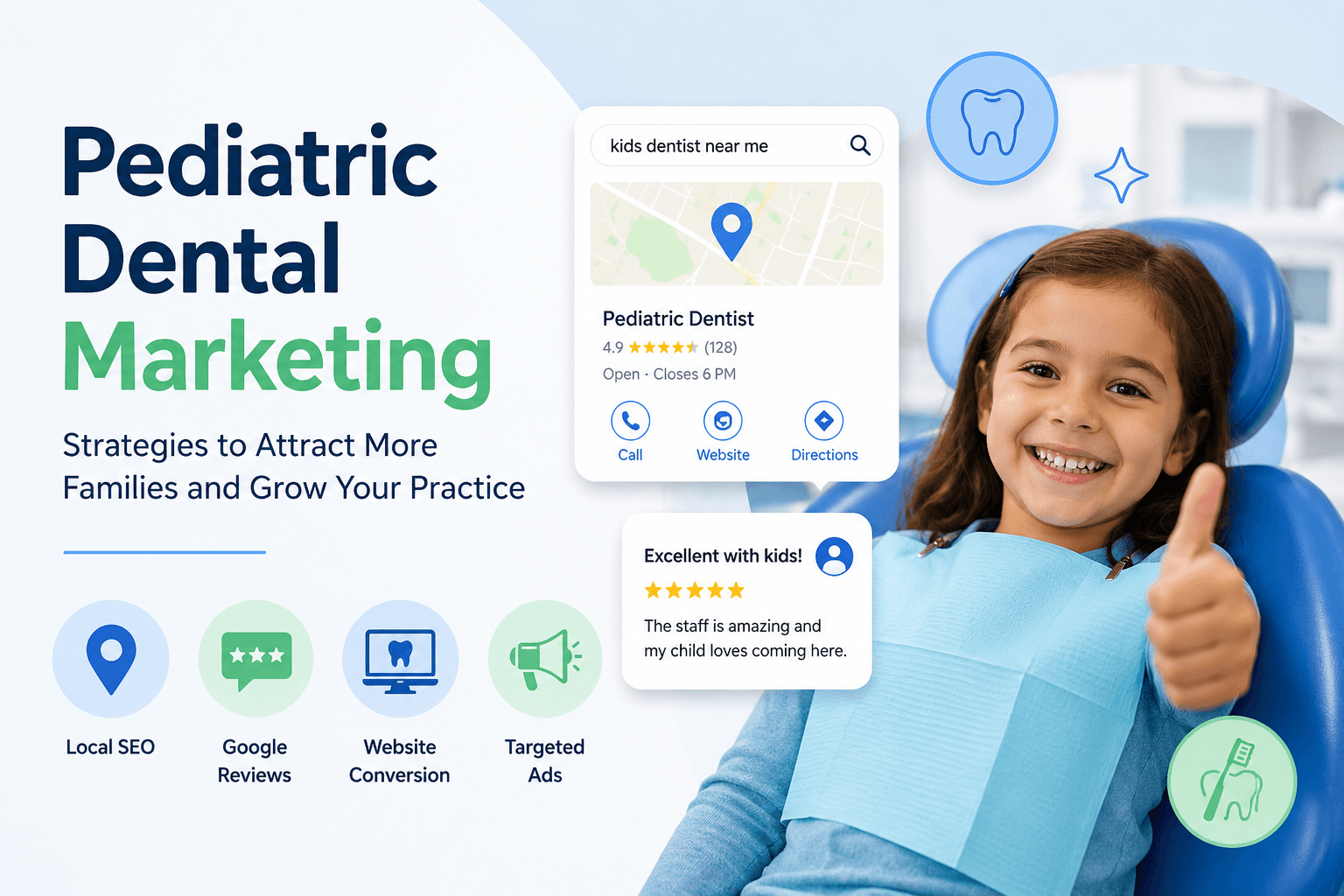
Pediatric dentistry marketing is the process of building visibility, trust, and consistent patient flow for dental practices that serve children and families. It combines local SEO, Google Business Profile optimization, parent-focused content, and a website experience designed to turn family searches into booked appointments.
The core challenge for pediatric practices is not just being visible. It is reaching parents at the exact moment they are searching for a dentist for their child and giving them enough confidence to choose your practice over the next option on the list.
This guide covers the specific strategies that work for pediatric dental marketing, why general dental marketing tactics fall short, and how to build a system that consistently brings new families through your door.
Why Pediatric Dental Marketing Requires a Different Approach
Parents search differently than adult patients. When a parent looks for a dentist for their child, they are not simply comparing prices or proximity. They are evaluating comfort, safety, qualifications, and whether the practice feels like the right fit for their family.
Generic dental marketing does not address these concerns. According to Google's consumer insights research, parents conduct multiple online searches before making healthcare decisions for their children, and trust signals heavily influence which provider they ultimately choose.
Pediatric practices need messaging, content, and a website experience tailored to what parents actually care about: a calm environment, a dentist who is good with kids, clear procedure explanations, and easy scheduling.
Search intent is also more specific. Parents use terms like "kids dentist near me," "pediatric dentist accepting new patients," and "best dentist for toddlers in [city]." These require different keyword targeting, different page structures, and different conversion triggers than standard dental SEO.
How Parents Search for a Pediatric Dentist
Understanding the search journey is essential before building any marketing strategy. Most parents follow a predictable pattern:
They search on Google using location-based terms like "pediatric dentist [city]" or "kids dentist near me."
They scan the Google Map Pack and compare star ratings, review volume, and proximity.
They click through to two or three websites and make a fast judgment based on design, messaging, and ease of contact.
They read recent Google reviews, specifically looking for mentions of child comfort and staff friendliness.
They book with the practice that gave them the most confidence, not necessarily the closest one.
Each of these steps is a place where your marketing either works or loses the patient. A strong pediatric dental marketing strategy addresses all five stages.
What Are the Core Channels for Pediatric Dental Marketing?
Local SEO
Local SEO is the foundation of patient acquisition for any pediatric practice. It determines whether your practice appears when parents search nearby.
The most important local SEO elements for pediatric dentists include:
Optimizing your Google Business Profile with accurate categories, services, photos, and hours
Building location-specific website pages that target your city and surrounding neighborhoods
Earning consistent citations on directories like Healthgrades, Zocdoc, and Yelp with matching name, address, and phone data
Publishing content that answers parent questions and targets specific long-tail search terms
Generating a steady flow of Google reviews from existing patients
Local SEO compounds over time. Practices that invest in it consistently tend to outperform those relying on paid ads alone.
Google Business Profile Optimization
The Google Business Profile is often the first thing a parent sees before visiting your website. A complete, active profile significantly increases the chance of a click and a call.
Key steps include selecting "Pediatric Dentist" as your primary category, adding all relevant services, uploading high-quality photos of your space and team, posting updates regularly, and responding professionally to every review.
"Parents are making decisions fast. If your Google profile looks incomplete or your last review is from two years ago, many of them will move on before they ever reach your website," Sriram Sivaraman, founder of North Media.
Website Conversion Optimization
Getting traffic to your website is only half the problem. The site itself must convert visitors into appointment requests.
For pediatric dental websites, the most important factors are:
A clear headline that speaks directly to parents
A visible, mobile-friendly booking button above the fold
A brief introduction that establishes the dentist's experience with children
Easy-to-find insurance and new patient information
Google reviews displayed on the homepage as social proof
A simple contact form or online booking option that takes under 60 seconds to complete
Most pediatric dental websites underperform because they are built for aesthetics rather than conversion. Structure and clarity consistently outperform design complexity.
Paid Advertising
Google Ads can accelerate new patient growth while organic SEO builds momentum. For pediatric practices, paid search campaigns work best when they target high-intent keywords and direct traffic to a dedicated landing page rather than the homepage.